
The problem
I originally built LEO Eyewear’s Shopify storefront from scratch in 2020, full theme, custom sections and blocks, mobile-first design across every page. Since then, the brand narrowed its focus to sell tech eyewear exclusively, and by 2026 the site hadn’t caught up to that shift. The visual identity was still built around a general eyewear brand rather than a single-category tech product. There was no dedicated conversion path built around that one product line, no pixel tracking across the ad platforms actually driving traffic, no real SEO foundation, and no payment or fulfillment setup built specifically for the Indian market the brand was now squarely focused on.
What I built
Designing in Figma before touching Shopify
For the redesign, every page got designed in Figma first and locked before any theme code was written, rather than iterating live in the theme editor, so the new direction was settled before implementation started.
A homepage built around one thing: the product in motion
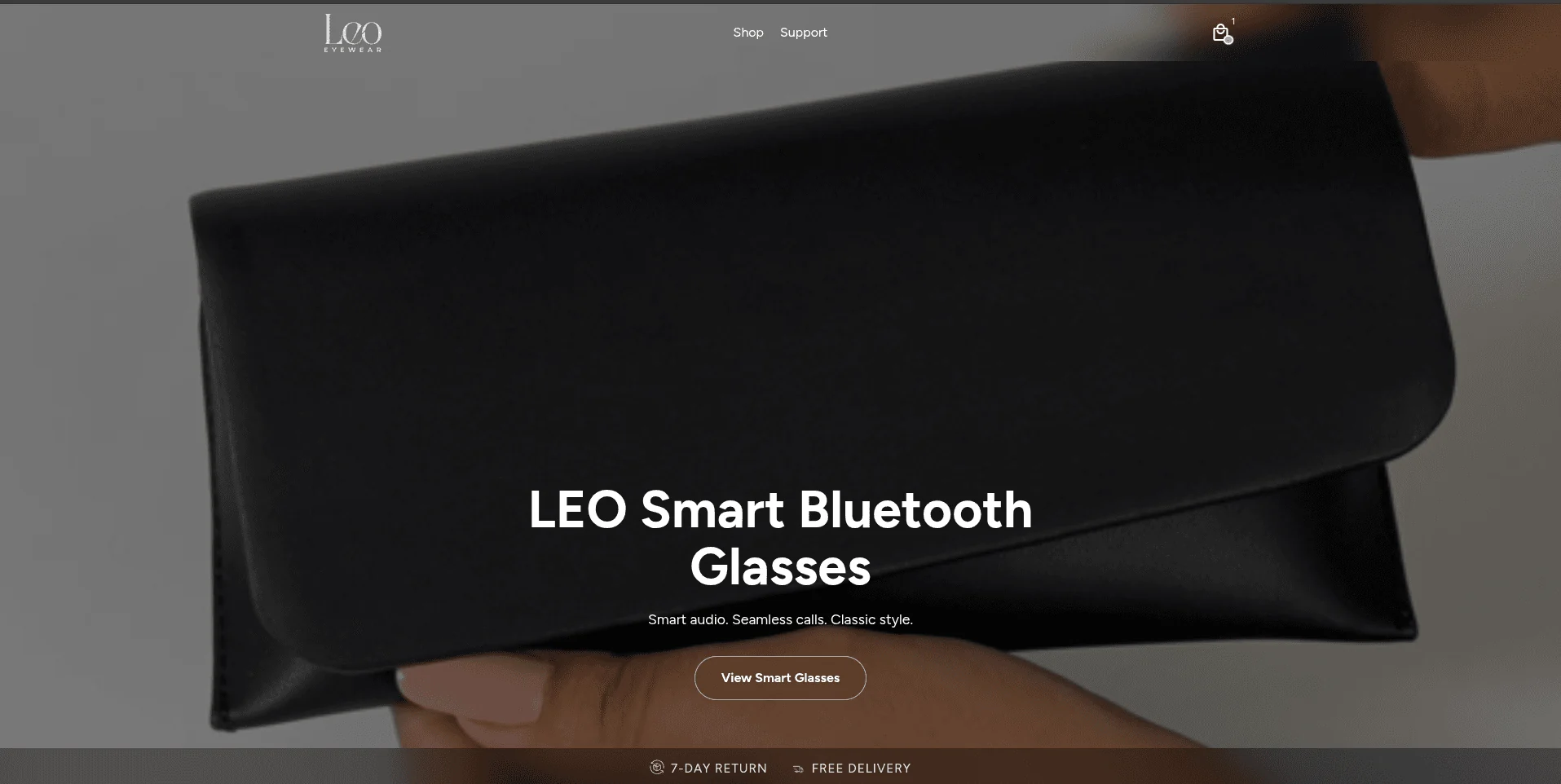
Instead of the scrolling, multi-section homepage from the original build, I built a fixed 100vh homepage that’s a single, full-viewport video section. For a tech eyewear brand, the product itself, how it looks and moves, is the actual differentiator, so the homepage was built to bet on that instead of a wall of copy and sections.
A header that reads its background
I built a transparent header that shifts font and logo color depending on what’s behind it as the visitor scrolls, so it stays legible over the video and over lighter or darker product imagery without needing a background box that would break the fixed-viewport concept.
Tracking across every channel driving traffic
I integrated Meta Pixel, Google Pixel, and Instagram Pixel tracking, so spend across all three channels can be measured against actual on-site behavior instead of running blind.
Technical and on-page SEO, done properly
I set up technical SEO and on-page SEO across the site, foundational work that doesn’t show up as a flashy feature but determines whether the brand shows up in search at all.
Custom Liquid on the product page
I added custom-coded elements directly in Liquid on the PDP, going beyond what the theme could do out of the box, since for a single-category product line the product page carries most of the actual selling weight.
A full CRO pass
I ran conversion rate optimization across the site, tightening the actual purchase path rather than just refreshing how pages look.
Razorpay and Shiprocket, built for the Indian market
I integrated Razorpay for payments and Shiprocket for fulfillment and tracking, the two pieces that actually matter for running e-commerce in India specifically, alongside Judge.me for product reviews.
What actually changed
| What changed | 2020 build | 2026 redesign |
|---|---|---|
| Homepage | Scrolling, multi-section | Fixed 100vh, single video section |
| Header | Static | Transparent, adapts font/logo color to background |
| Design process | Built directly in the theme editor | Figma first, then built in Shopify |
| Ad tracking | Not in place | Meta, Google, and Instagram pixels integrated |
| SEO | Not addressed | Technical and on-page SEO set up |
| PDP | Theme defaults | Custom-coded Liquid elements |
| Conversion path | Unoptimized | Full CRO pass |
| Payments | Not built for the Indian market specifically | Razorpay integrated |
| Fulfillment & tracking | Not in place | Shiprocket integrated |
The engagement
This has run as two phases with the same client: the original full storefront build in 2020, then a complete ground-up redesign in 2026 once the brand narrowed its focus to tech eyewear, rebuilt around a single fixed-viewport homepage, full ad tracking, real SEO, and payment and fulfillment infrastructure built specifically for the market they sell into.