
The problem
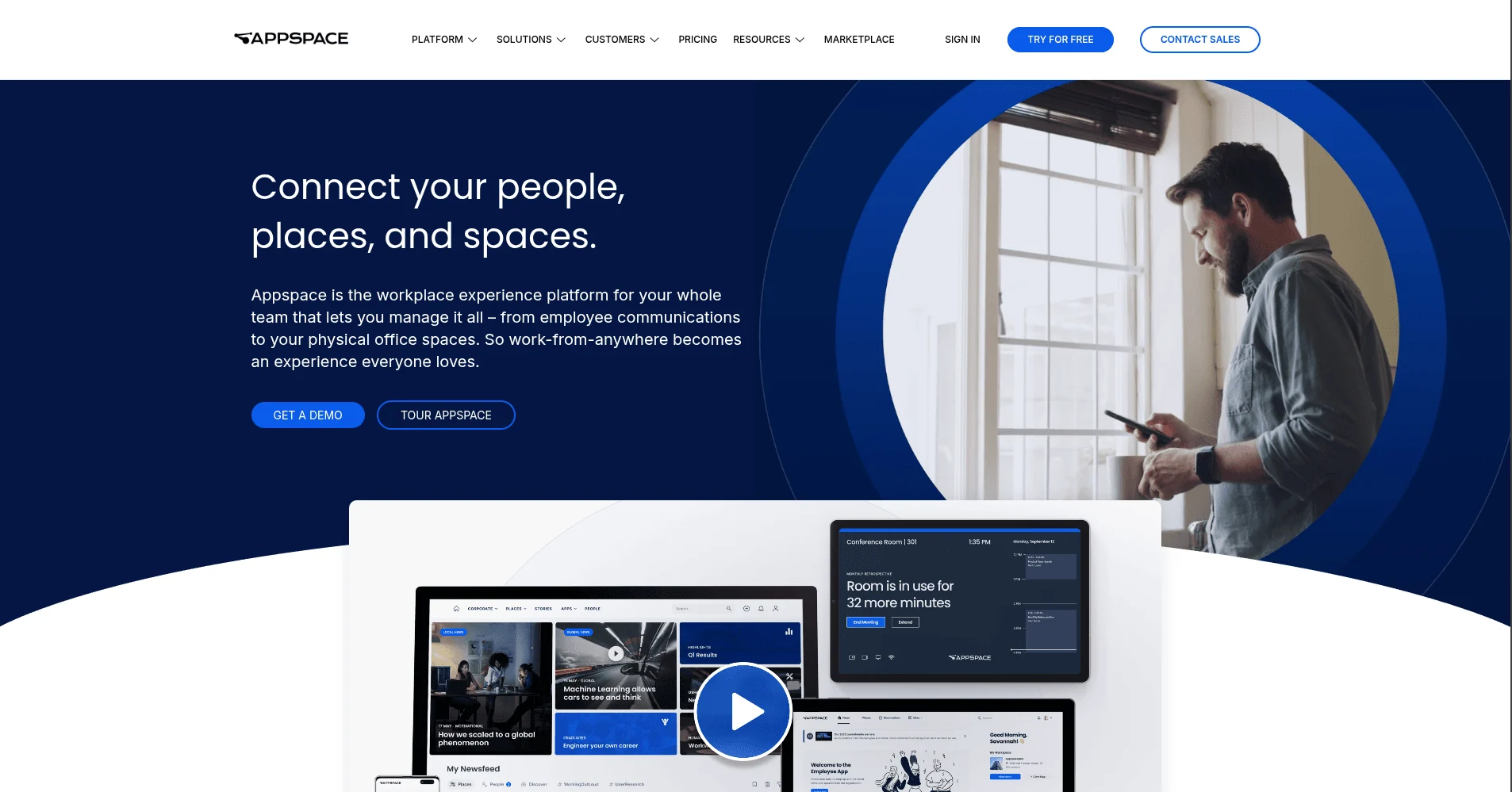
Appspace is a U.S.-based enterprise software company whose workplace experience platform serves some of the world’s biggest organizations, and their WordPress site was a core piece of that business, the platform behind their digital marketing, lead generation, and brand presence. It ran on Elementor, but Elementor alone couldn’t do what an enterprise marketing team actually needed: dozens of interconnected landing pages, funnels, and an interactive quiz used for lead generation, without a developer standing between every layout idea and its shipping. On top of that ceiling, specific things were flat-out broken, the pricing accordion’s arrow icons didn’t rotate on expand and opened inconsistently, the quiz gave no feedback when someone answered a question wrong, and the homepage slider had no drag support and fell apart on mobile.
What I built
Nine months across nearly every page on the site
I worked with the Appspace team for over nine months, building and maintaining the pages that carried the business, homepage, pricing, lead gen, about, CTAs, sliders, and the marketing funnels connecting all of them. Rather than one-off page builds, most of the work went into reusable custom Elementor blocks and plugin-based modules, so once something was built once, it could be reused and reconfigured without a rebuild.
A quiz system built for real lead generation
I built a custom quiz plugin that let the marketing team create their own multi-step quizzes, questions, answer logic, and custom result-based redirects, fully configurable from the backend rather than hard-coded per quiz. The scoring system ran on core JavaScript for responsiveness, with custom templates handling both the quiz display and the results page. When someone answered a question wrong, the quiz now shows the correct answer instead of moving on silently, and I built a branch where a “take me to the book” button lets visitors skip the quiz entirely and land straight on the results page, with all quiz-result language stripped out of that path so it reads correctly no matter how someone arrives there. Based on their score, visitors get routed to a designated destination automatically.
Reusable pricing and CTA modules, not one-off pages
I built a pricing section plugin with flexible input options and dynamic display formats, CTA blocks with animation, button logic, and multiple layout configurations, and a set of section templates used site-wide to standardize design while still giving editors real drag-and-drop control. The point of all of it was the same: get small layout tweaks and content variations out of the dev queue and into the marketing team’s own hands.
Fixing the pricing accordion
The accordion arrow icons didn’t rotate on expand, and items opened inconsistently from one click to the next. I fixed both, so the accordion now behaves predictably every time.
A homepage slider built from scratch, with drag support
I built the homepage slider natively in HTML, CSS, and JavaScript rather than leaning on an Elementor add-on, with synced navigation dots and image/text transitions. I tuned the auto-fade timing to roughly five seconds after initial feedback, then rebuilt it again to add drag support and full mobile responsiveness, including moving text below the image on smaller screens.
QA across every build
Every plugin, template, and page went through testing across browsers and devices before shipping, since a site carrying this much of the company’s lead generation couldn’t afford to ship broken on any one platform.
What actually changed
| What changed | Before | After |
|---|---|---|
| Pricing accordion | Static arrows, inconsistent expand | Rotating, consistent behavior |
| Quiz | No feedback on wrong answers, no lead-gen system | Fully custom quiz system with scoring and dynamic redirects, used for lead generation |
| Layout & content changes | Developer-dependent for every tweak | Editors manage layout via reusable Elementor modules, no dev support needed |
| Homepage slider | Basic fade, no drag, breaking on mobile | Drag support, timed auto-play, fully mobile-responsive |
| Pages delivered | - | Dozens of new, fully responsive pages shipped over nine months |
The engagement
This ran as a long-term, high-impact engagement, nine months touching nearly every page and interactive component on the Appspace marketing site. By the end, the internal team had reusable modules for pricing, CTAs, and layout that meant small changes no longer had to wait on a developer, and a quiz-based lead gen system built specifically for how their marketing team wanted to run it.